A Little Pilgrimage in the Hills — Nomura's Own 88 Sacred Sites
A pilgrimage you can walk in an afternoon
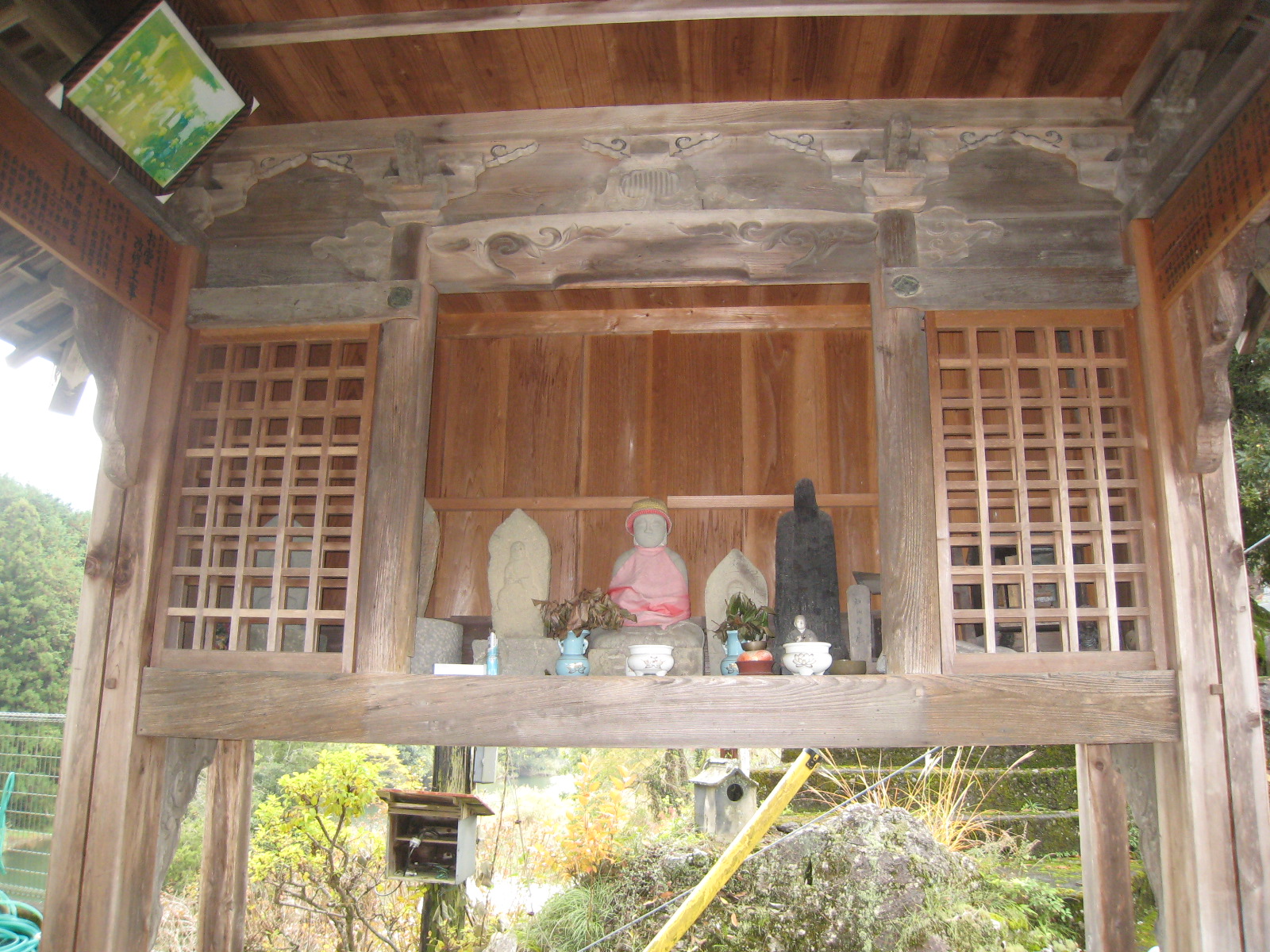
Shikoku, the smallest of Japan's four main islands, is famous for one thing above all: o-henro, the 1,200-kilometer pilgrimage that loops past 88 sacred Buddhist temples. Pilgrims in white robes and conical straw hats have walked it for centuries.
But you don't have to walk the whole island. Here in Nomura, there is a miniature version of that pilgrimage — the Nomura Shikoku 88 Sacred Sites (Nomura Shikoku Hachijūhakkasho). Designated a folk cultural property by the city of Seiyo, it winds through the wooded hills with stone Buddhist statues set along the way. You can trace the whole route on foot, in a single outing. It is a small, intimate pilgrimage, shaped by generations of local prayer.
Founded in 1847 — before Perry
The site was established in 1847 (Kōka 4). To put that in context for the wider world: it was just one year after the American commodore James Biddle sailed into Uraga Bay — and still six years before Perry's famous "Black Ships" arrived in 1853. In other words, this path was laid at the very threshold of Japan's turbulent opening to the West.
Later, in 1868, more Buddhist statues were donated, and further repairs were made during the Meiji era, bringing the site to the form we see today.
Prayers from as far as Osaka
The pilgrimage is said to have been created by villagers, inspired by the stories of those who had completed the real Shikoku o-henro. Because this was an age when Shinto and Buddhism were still intertwined, some of the temple names carry small inaccuracies — but that is part of its honest, hand-made charm.
What is striking is how far the devotion reached. The statues were donated not only by locals, but by people from neighboring Tachima and Yoshida, and from as far away as Saijō and even Osaka. Each stone figure is a quiet record of how deep the faith ran, and how widely people and goods once traveled through this valley.
Boulders, statues, and a thrilling climb
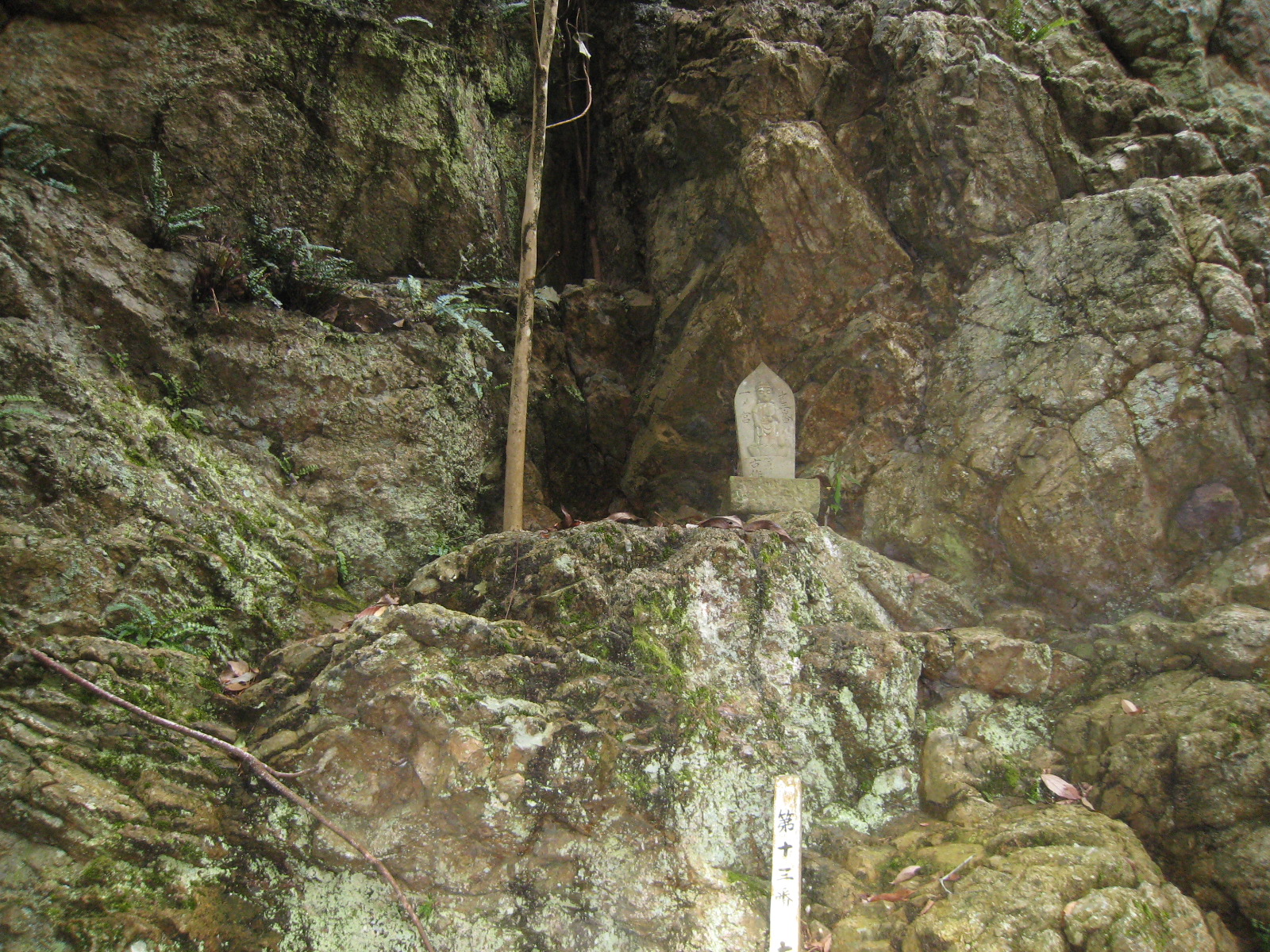
The route begins at the first site, Jigen-dō, and leads up hill and down dale, past rocky outcrops. Along the way, weathered stone Buddhas greet you with gentle, unassuming faces. The final, 88th site is Daisen-ji, the family temple of the lord of Shiroki Castle.
The path doubles as a hiking trail, and was once a favorite route for local school excursions. In places, statues sit atop giant boulders — a genuinely thrilling scramble — and from the high ground, the rice fields and mountains of Nomura open up below.
Jōmon memory beneath the stones — the Takashiro Rock Shelter
And here is the surprise: beneath these very boulders lies the Stone Age. This is the Takashiro Rock Shelter site.
Excavations that began in 2002 revealed that, in the Jōmon period — Japan's ancient hunter-gatherer era, thousands of years ago — people made stone tools in the shelter of these rocks. Imagine it: a Jōmon workshop, layered beneath a 19th-century pilgrimage, still walked today. Jōmon people, Kōbō Daishi, and us — three eras standing on the same ground. The sheer depth of time here makes you want to pause and press your palms together.
Prayer, nature, and a history that runs impossibly deep. Feel like taking a little walk?
ZEROSPHERE / The Keeper of Zero