One Apron, One Neighborhood's Pride — The Keshō-mawashi of Otoi
That gorgeous, richly embroidered apron a sumo wrestler wears at his waist during the ring-entering ceremony — the keshō-mawashi. Here in Otoi, sumo aprons made back in the Meiji era still survive to this day. And sealed into each one is the sheer passion the people of that time poured into Otoi Sumo.
Each neighborhood competed to make its own
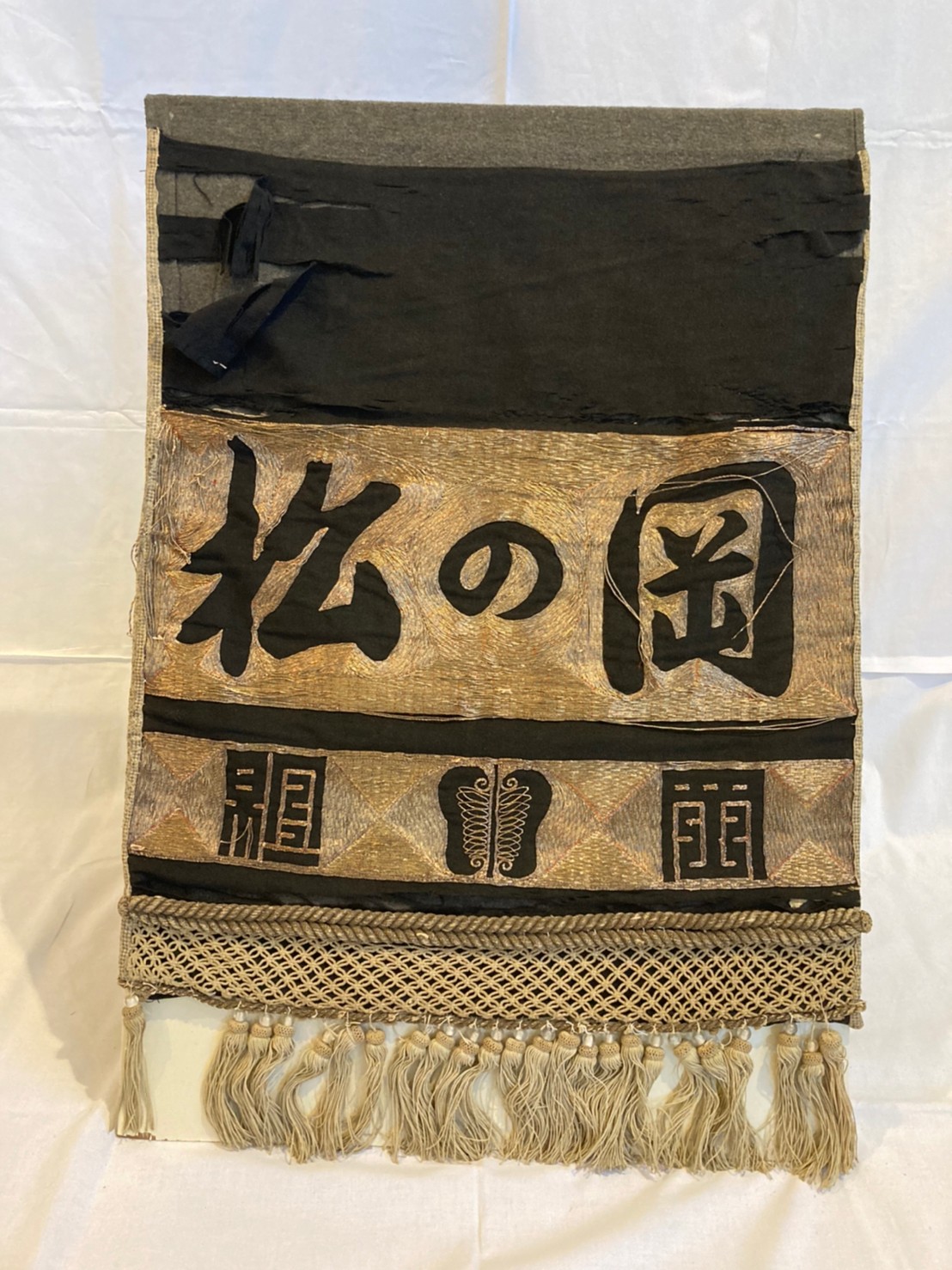
These aprons were made in 1889 (Meiji 22), at a time when Otoi Sumo had taken root as a community event and its popularity was surging.
On the initiative of Yokoyama Chūsaku of the town district, the eleven neighborhood groups of Nomura, together with the Ogata head family, produced twelve keshō-mawashi in all.
Behind this lay a great turning point in history. Japan's new municipal system was promulgated in 1888 (Meiji 21) and put into effect in 1890 (Meiji 23). With mergers looming, it is said that each neighborhood threw itself into making an apron — staking the honor of its own group before the old boundaries disappeared.
In other words, these aprons are proof of a proud rivalry: this is our neighborhood. A golden dragon on a crimson ground; a tiger dancing on black. Into every single one is woven a fierce refusal to lose.
The strongest man inherits the ring name
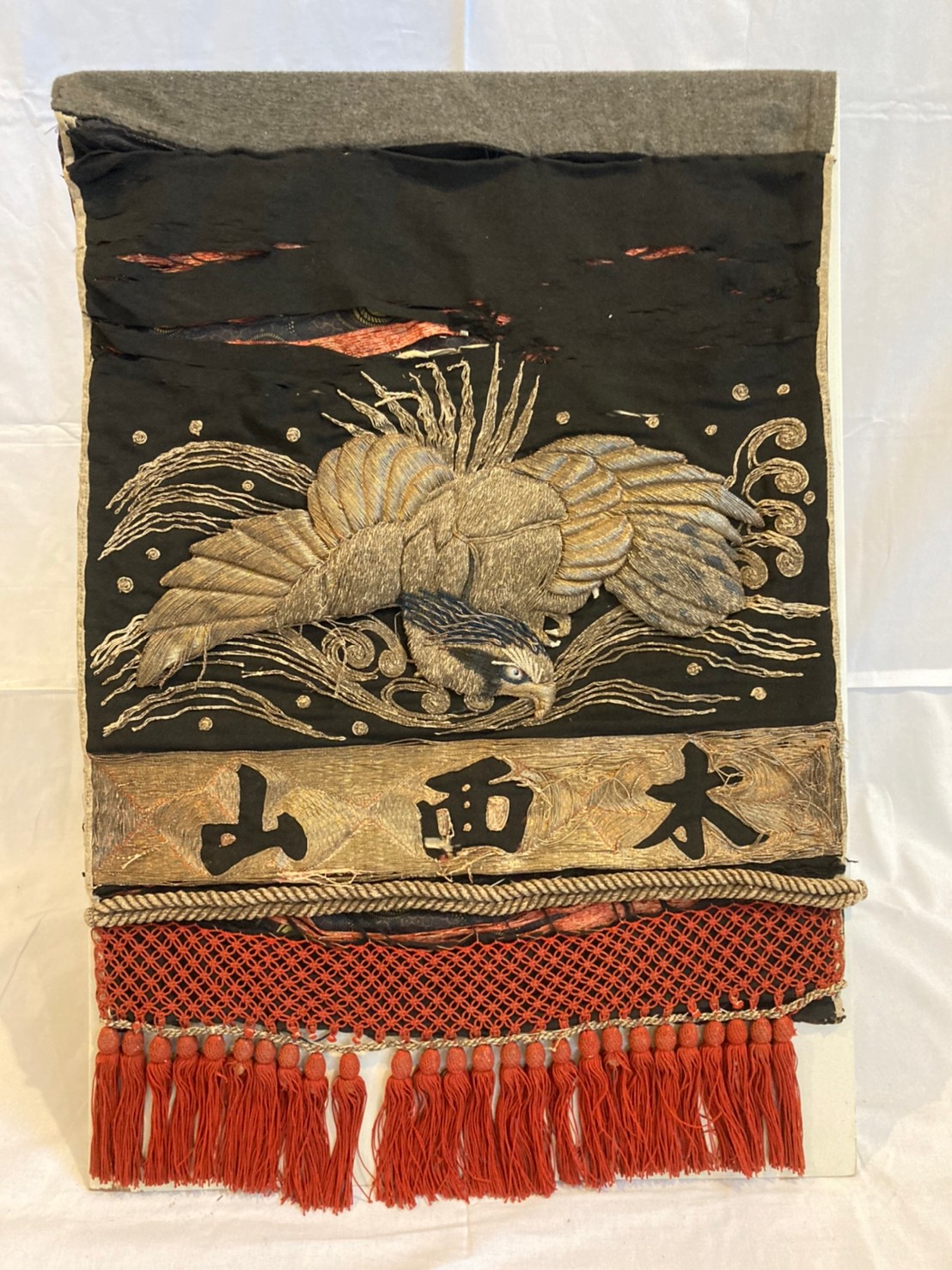
It wasn't only the aprons they poured themselves into.
In each hamlet, the strongest man is said to have inherited a hereditary shikona — a sumo ring name — passed down through the generations: Ishigatake, Sakuragatake, Araonami, Ujimigawa… A shikona was no mere nickname. It was a symbol of the neighborhood's strength, and the pride of the man who carried it.
They made the aprons; they carried the names. Otoi must truly have been the year's grandest stage — the one time a whole community collided with all its might.
Still here, today
Of the twelve, ten keshō-mawashi survive.
Each apron belongs to its neighborhood, and the boxes they are kept in reportedly bear the instruction that "each group shall store its own." A sign of just how carefully they have been treasured.
Today they are managed by the Nomura Tourism Association and stored at the Silk Museum. For more than 130 years, the skill of Meiji-era artisans and the pride of each neighborhood have kept their colors undimmed. To stand before them is to feel, across the centuries, the heat of that era rising up again.
There were people who made these aprons, carried these names, and protected it all so it could be handed down. As the Keeper of Zero, I want to carry the feeling woven into each one forward, to the next generation.
(Reference: Yoneda Takazō, "Otoi Sumo and the Keshō-mawashi")
ZEROSPHERE / The Keeper of Zero